I haven’t written a post for a couple of weeks, but it is not for lack of biking to bakeries. It’s just that nothing I have eaten has titillated my tongue or moved me to write. So I have decided to write about reading, one of my very favorite pastimes. Two of the books I am currently enjoying are food related, and though they cannot be described as page-turners, they are enlightening and very well-written. If you relish and care about food, you will appreciate these books.
Bread, Wine, and Chocolate: The Slow Loss of Foods We Love, by Simran Sethi, is not the downer its title suggests. I first learned about Sethi’s work when she was a guest on one of my favorite podcasts, KCRW’s Good Food. Soon thereafter, I became addicted to her excellent, edifying podcast about chocolate, The Slow Melt. Who knew there was so much to learn about this incredible bean? During the time I was listening to Sethi’s podcast, I likely bored the heck out of my friends and family with an endless stream of cocoa facts. In the podcast, she studies and explores firsthand how and where chocolate is made, its history–marked by colonialism–and the exploitation of workers that is not uncommon in the world of chocolate. I became a more mindful consumer of chocolate thanks to Sethi’s serious study, and encourage you to listen to the podcast.
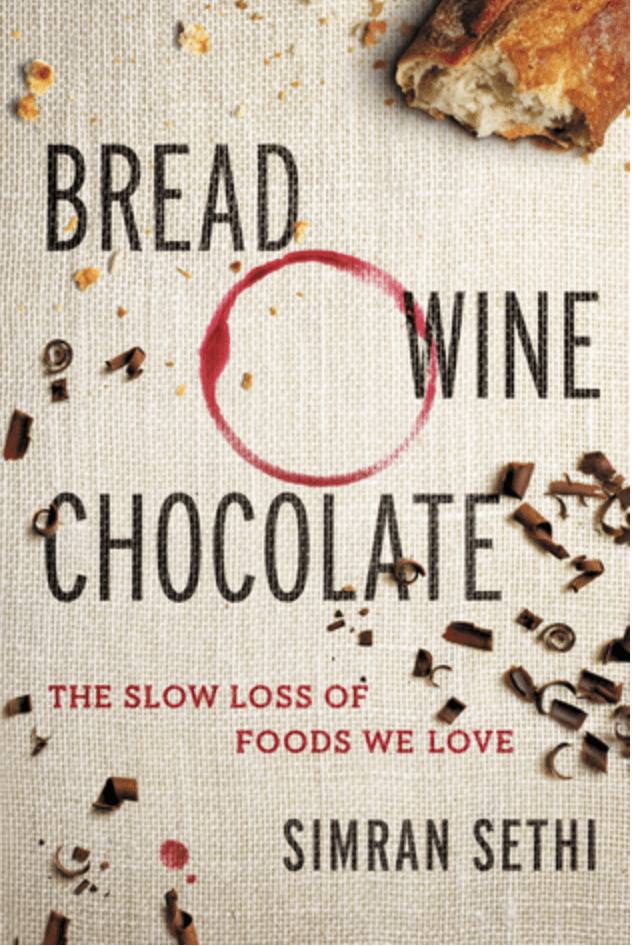
Last year, in addition to trying to memorize Sethi’s wonderful instructions on tasting chocolate on NPR just before Valentine’s Day, I began reading her book. From the first paragraph, I knew it would be filled with beautiful writing and poignant insights: “This is a book about food, but it’s really a book about love. . . to pay attention to these ordinary pleasures isn’t just to see them anew but to experience them in a whole new way.” By describing how we, meaning the entire world, came to eat the foods we eat (an alarmingly small variety), Sethi makes clear that now we need to change our ways.
Though you may imagine the tone of the book is depressing, Sethi aims to encourage us to eat better and with more pleasure instead of criticizing our habits: “There is so much that brings us misery and makes us feel inferior. Don’t let it be chocolate or wine.” She urges readers to become aware of how our personal food choices determine how we all ultimately eat. By focusing on bread, wine, and chocolate, the incredible joy that can be derived by consuming them, she writes how they, like many other foods, are endangered. Mostly, she wants us to know that such delicious things are worth fighting for, and that all of us need to participate in this battle since “No country is self-sustaining when it comes to the range of diversity needed to develop improved varieties of crops. We feed each other.”
I am only a quarter of the way through Bread, Wine, and Chocolate. Once I finish it, and have learned of the concrete ways to be a more mindful eater, I will share Sethi’s wisdom.
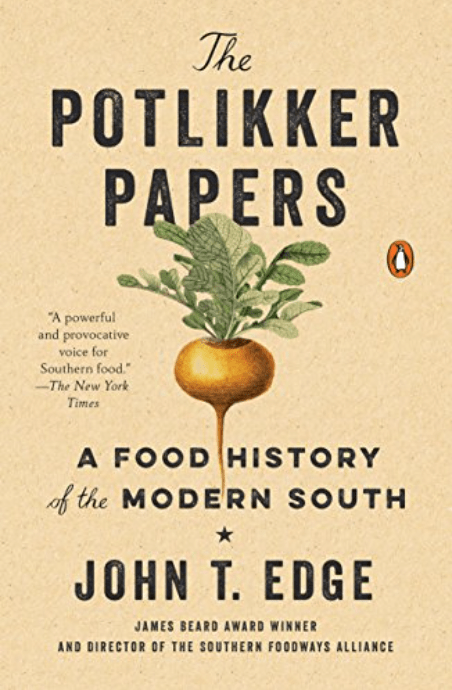
The Potlikker Papers: A Food History of the Modern South, by John T. Edge, is a book I have been slowly working my way through. I used to hear Edge’s voice on Gravy, an excellent podcast from The Southern Foodways Alliance. Through Gravy, I became even more convinced that studying how we eat offers a window into our politics and society. According to Edge, “Decade by decade, food narratives illumine history. On the long march to equality, struggles over food reflected and affected change across the region and around the nation.” Edge takes the reader from the 1950s to 2017, bearing in mind that “America has long reacted with vigor to the South because the nation recognized the worst and best of itself here.” His book made me question many times why food history is not taught in American public schools. I am only halfway through this powerful book, and I would love to form a book group discussion around it. Let me know if you would be interested.
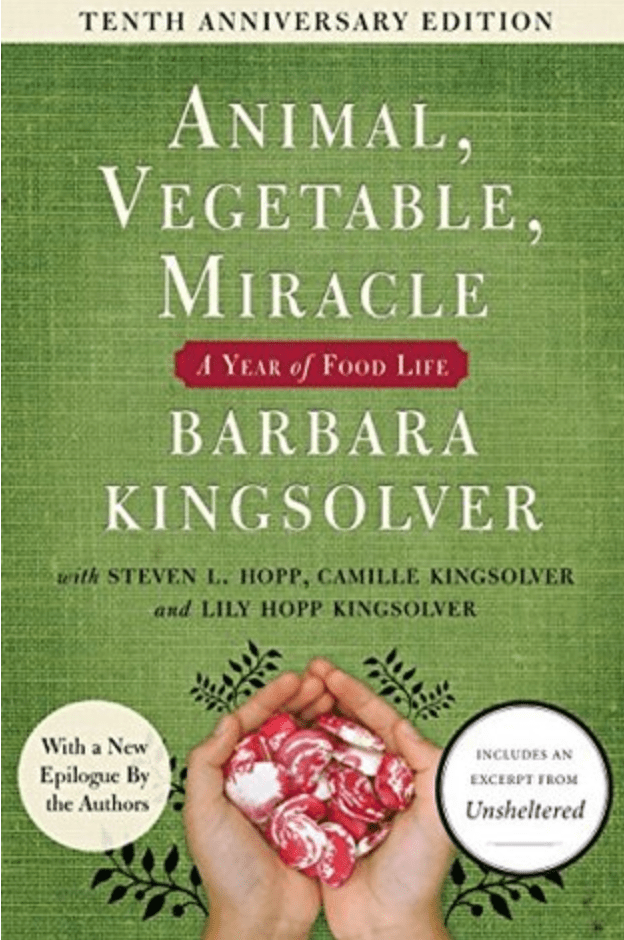
P.S. Years ago I started reading Animal, Vegetable, Miracle: A Year of Food Life by Barbara Kingsolver. I am continually awestruck by her lyrical, potent, and deep writing, and each of her novels has stayed with me long after I finish the final pages. I don’t remember why I abandoned her memoir about living off the land; now seems like a good time to revisit it.

 Biking to Bakeries
Count me in! The Potlikker Papers sounds fascinating.
LikeLike
Great!
LikeLike
Just love your writing – you make me want to devour books as well as pastries. What I admire is your full immersion in the thing that you are taking in ~ whether by reading or by eating. Keep ‘em coming!
LikeLike
I know you are a fellow book lover! Immersing myself in the world of food is a dream come true for me.
LikeLike